

Review · NAFPLIO TOURS
From Athens: Mycenae, Nafplio and Epidaurus Guided Tour
Mycenae and Epidaurus give you two very different looks at ancient Greece: one is a rugged citadel tied to Agamemnon and Homeric legend, the other is a graceful theater still prized for its sound. Add the Corinth Canal and Nafplio, Greece’s first modern capital, and you get a full day that connects mythology, archaeology, seaside town life, and modern Greek history. The guided visits inside Mycenae and Epidaurus are the strongest reason to choose this trip.
I especially like the comfortable minivan transport and the way the day mixes structured touring with free time. Guides such as Theo, George, Georgia, Patty, and Danae have been praised for making the long drives useful without turning every minute into a lecture. The drawback is simple: this is a true nine-hour day, and traffic can stretch it longer. You also pay separately for the Mycenae and Epidaurus entrance tickets, as well as lunch and drinks.
Key points to know
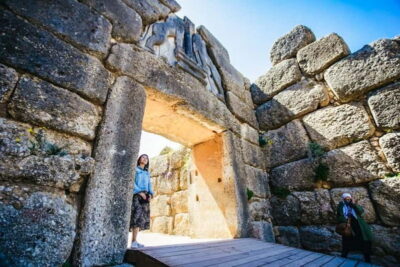
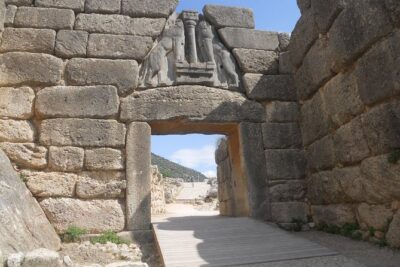
- Mycenae brings Homeric Greece to life: Walk beneath the Lion’s Gate, see the Cyclopean Walls, and visit the Treasury of Atreus.
- Epidaurus is the day’s acoustic marvel: The fourth-century theater remains remarkably well preserved and is still used today.
- Nafplio gives the schedule a welcome change of pace: Enjoy narrow streets, classical buildings, harbor views, and time for lunch.
- The Corinth Canal is a quick but worthwhile stop: Fifteen minutes is enough for photographs, not a full visit.
- Small groups make the long day easier: The available private and small-group formats allow more personal attention than a large coach tour.
- Tickets are extra: Budget for admission to both archaeological sites, plus food and drinks.
Why this Peloponnese day trip works
The Peloponnese is close enough to Athens for a day trip, but far enough away to feel like a change of scene. You leave the city, cross into the region of Argolis, and spend the day among ancient ruins, fortified towns, and open countryside.
This tour works best because it does not focus on one type of sight. Mycenae is dramatic and myth-filled. Nafplio is relaxed and easy to enjoy at your own pace. Epidaurus is quieter, more refined, and built around one extraordinary theater.
The guide matters here. Without context, Mycenae can look like a pile of very old stones, and Epidaurus can seem like a beautiful semicircle of seats. A good guide explains how the places fit into Greek mythology, archaeology, theater, and national history. Guides including Theo and Patty have been praised for making the subject accessible to both serious history fans and family members who may not arrive with the same level of interest.
You should expect a busy schedule, but not a frantic one. The listed stops allow roughly an hour at Mycenae, time for the Tomb of Agamemnon, an hour at Epidaurus, and about 45 minutes of free time in Nafplio, followed by a one-hour lunch stop. The exact rhythm can change with traffic and the group.
A few more Nafplio options worth putting side by side
- From Athens: Mycenae, Epidaurus & Nafplio Full Day Trip
★ 4.8 · 2,438 reviews - From Athens: Mycenae, Epidaurus & Nafplio Full-Day Tour
★ 4.5 · 1,580 reviews - Athens: Ancient Corinth & Nafplio Full Day Trip with Swim
★ 4.8 · 523 reviews
The Corinth Canal: a sharp opening view
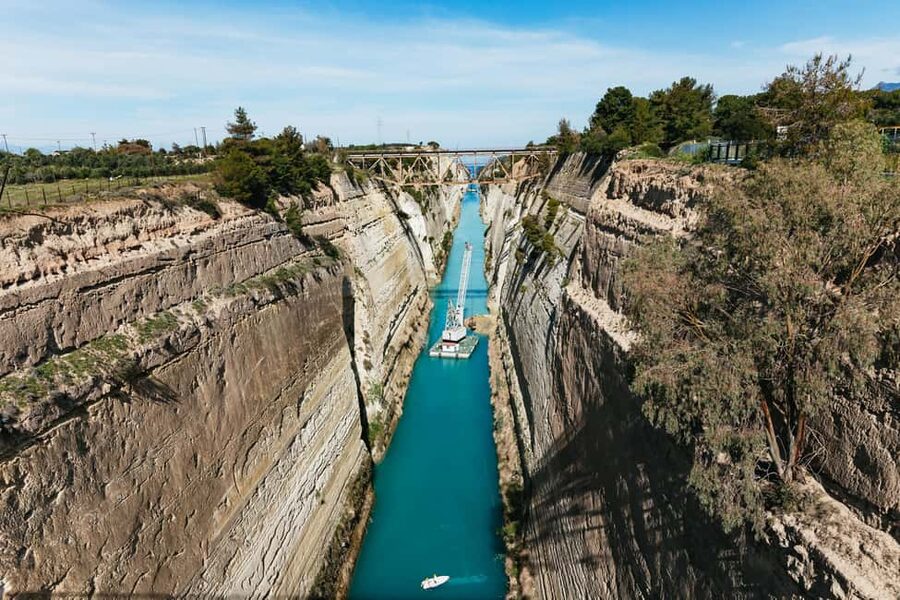
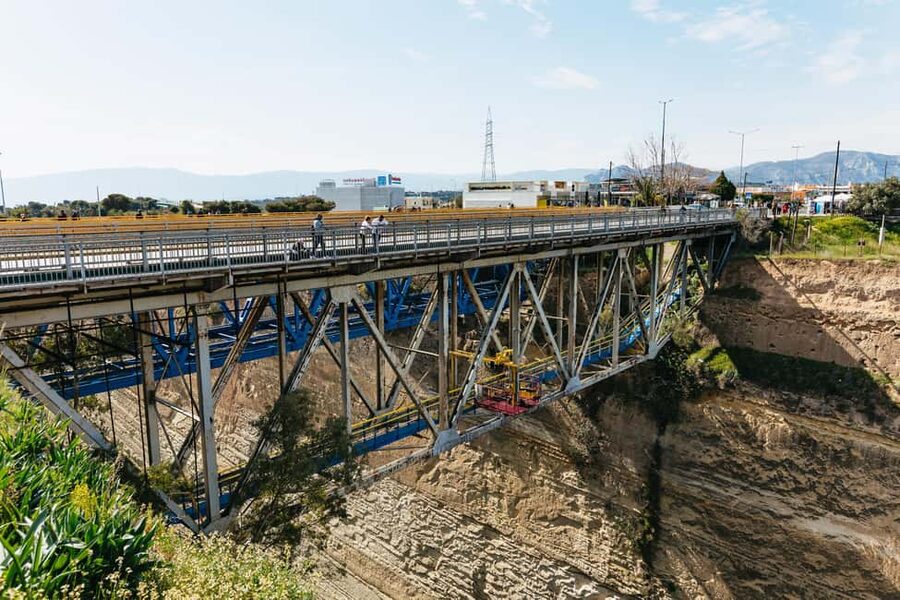
The first notable stop is the Corinth Canal, where the route between Athens and the Peloponnese narrows dramatically. The canal connects the Saronic Gulf with the Gulf of Corinth and cuts through the land in a striking man-made trench.
You get about 15 minutes here, so think of it as a photo stop rather than a full attraction. That is enough time to stretch your legs, take in the scale of the cut, and photograph the water far below. It also breaks up the first part of the drive.
The canal is a useful preview of the day’s theme: Greece is not only ancient temples and myths. Its geography has shaped trade, travel, war, and settlement for centuries. Your guide may use the drive and this stop to explain the route into Argolis.
Mycenae and the world of Agamemnon
Mycenae is the emotional center of the tour. The site is linked with the legendary king Agamemnon, leader of the Greek forces in the Trojan War according to Homeric tradition. The ruins belong to the Bronze Age world that helped inspire those stories, though mythology and archaeology do not always line up neatly.
That distinction is one reason a guide is valuable. You can ask what is known from excavation, what comes from later legend, and how the two became connected in the popular imagination.
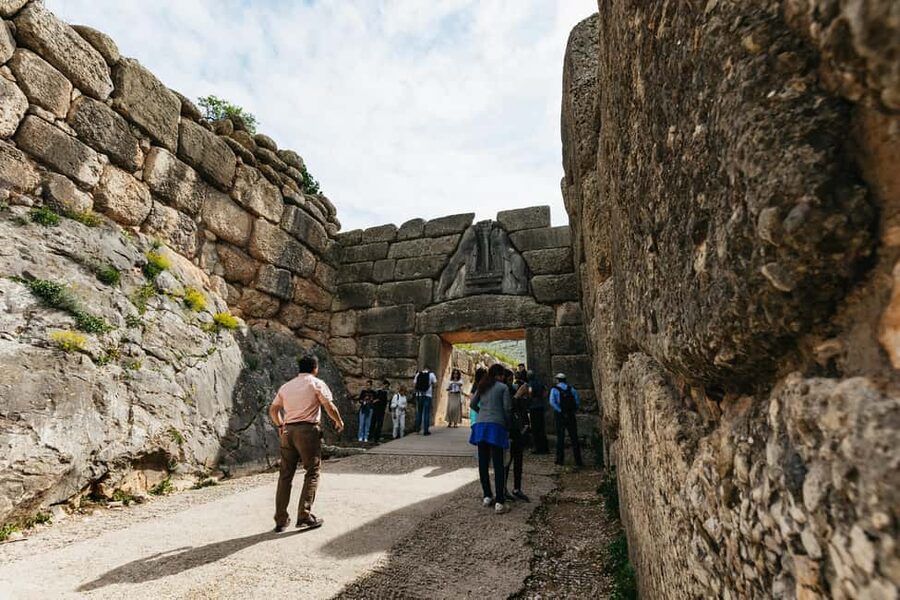
The approach to the citadel gives you a feel for its defensive position. The Cyclopean Walls are built from huge blocks of stone. Later Greeks imagined that only the Cyclopes could have moved them, which tells you something about the impression the walls made on people long after the original builders were gone.
You then pass through the Lion’s Gate, the famous entrance marked by its carved relief. It is one of those ancient details that photographs well, but it is better understood on site, where you can see how the gate fits into the heavy fortifications.
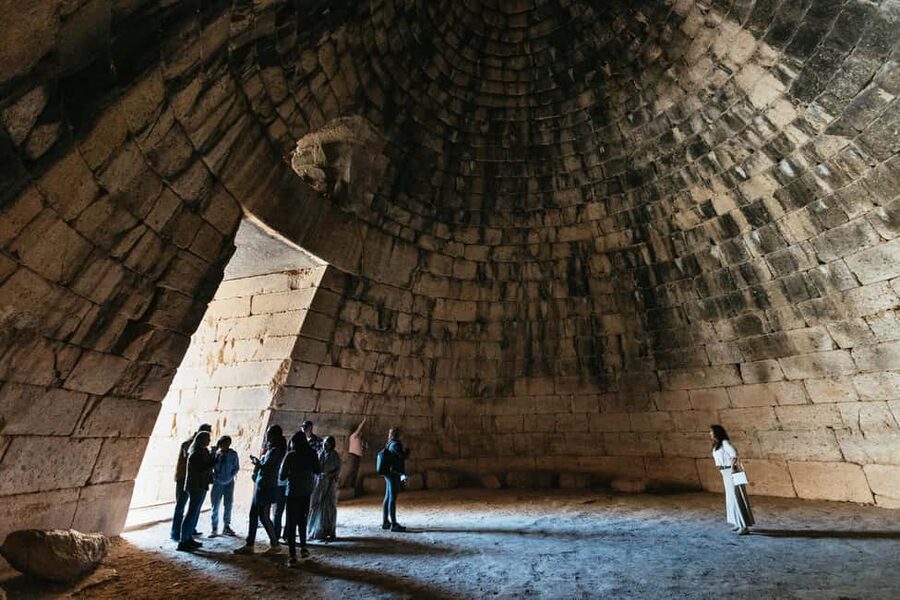
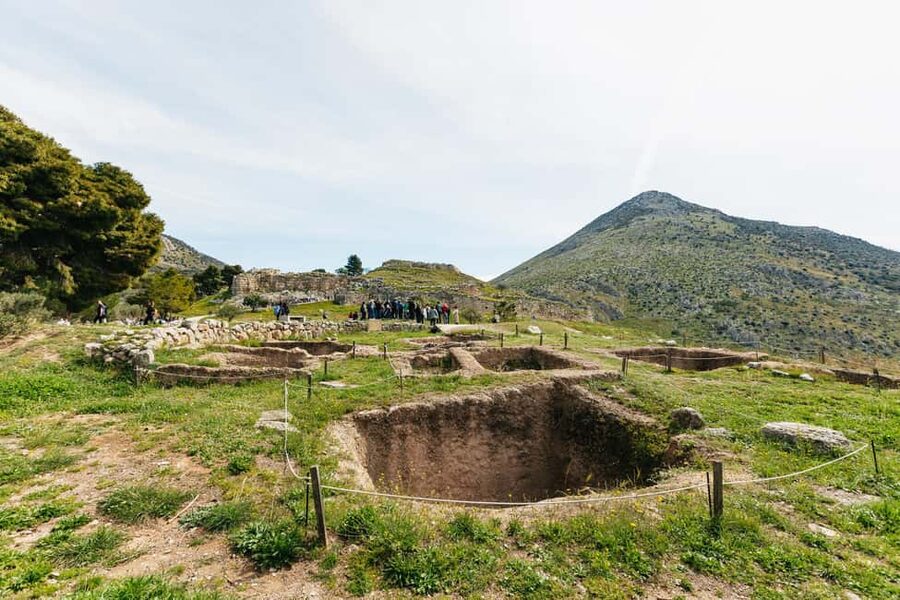
Inside the citadel, the remains include royal tombs and foundations of the former settlement. The tour also includes the Tomb of Agamemnon, usually called the Treasury of Atreus. It is a large beehive-shaped tomb with a long entrance passage and a powerful sense of scale.
The tomb is not a treasure house in the ordinary sense, and the name comes from later tradition. Still, stepping into the chamber gives you a strong impression of the engineering and ceremony of Mycenaean burial practices. The scheduled guided visit to the tomb lasts about 20 minutes, while the main archaeological site receives about an hour.
Wear shoes with a secure grip. The ground is uneven, and the site includes exposed paths with little shade. The day can also be hot, so bring water, a hat, and sun protection. Since the entrance ticket is not included, check the current admission cost when booking and keep some extra time in mind at the entrance, even though the activity is advertised with skip-the-line access.
Nafplio: a welcome break from ruins
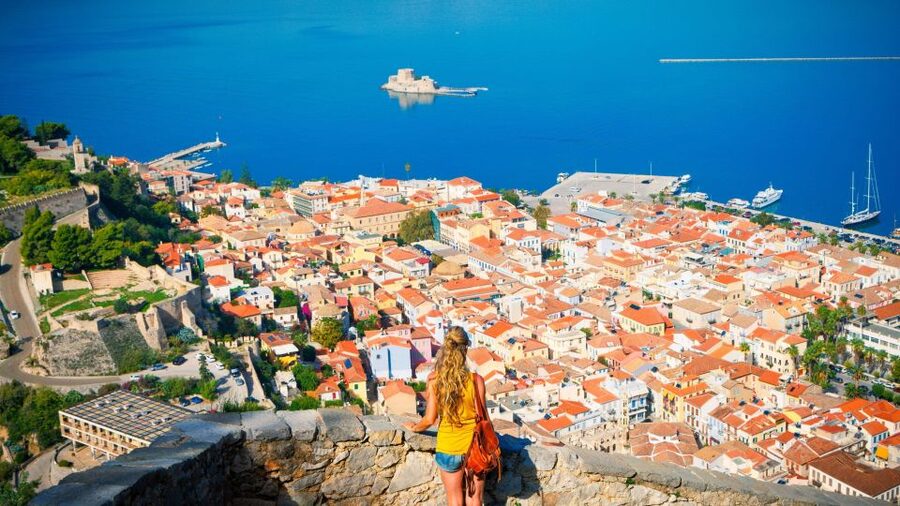
Nafplio was the first capital of modern Greece, and it feels quite different from Mycenae. Its narrow streets, classical buildings, harbor, and Venetian character make it the most relaxed stop of the day.
You have around 45 minutes of free time before lunch. That is not enough for a complete exploration, but it gives you time to walk through the center, look around the harbor, and get a sense of the town’s scale. You can also see the Palamidi fortress rising above Nafplio and the fortified island of Bourtzi in the harbor.
The schedule gives you a separate lunch period of about an hour. Food is not included, so the cost depends on where you choose to eat. Guides have sometimes helped groups find suitable places, including options for vegetarian diners and local gyros or seafood. If you have dietary needs, tell the guide early in the day so the lunch stop is easier to arrange.
Nafplio is also where you may want to resist rushing. After the concentration required at Mycenae, the town offers a chance to simply walk, browse, and enjoy the setting. The tradeoff is that 45 minutes passes quickly. You probably will not have time to climb Palamidi fortress, visit every museum, and enjoy a leisurely meal.
The tour presents Nafplio as a taste rather than a full visit. If this town is a major reason for your trip, consider returning independently for a longer stay. If your goal is to sample several important places in one day, the short visit is a sensible compromise.
Close by, and nothing like it:
- Mycenae and Nafplion Day Trip from Athens with Official guide
★ 4.5 · 501 reviews - Argolis: Full-Day Tour in Mycenae & Nafplio
★ 4.2 · 350 reviews - Mycenae, Epidaurus, Nafplio Full Day Private Tour from Athens
★ 5.0 · 270 reviews - Mycenae, Epidaurus & Nafplio Full-Day V.R audio guided Tour
★ 4.5 · 248 reviews
Epidaurus and the famous theater
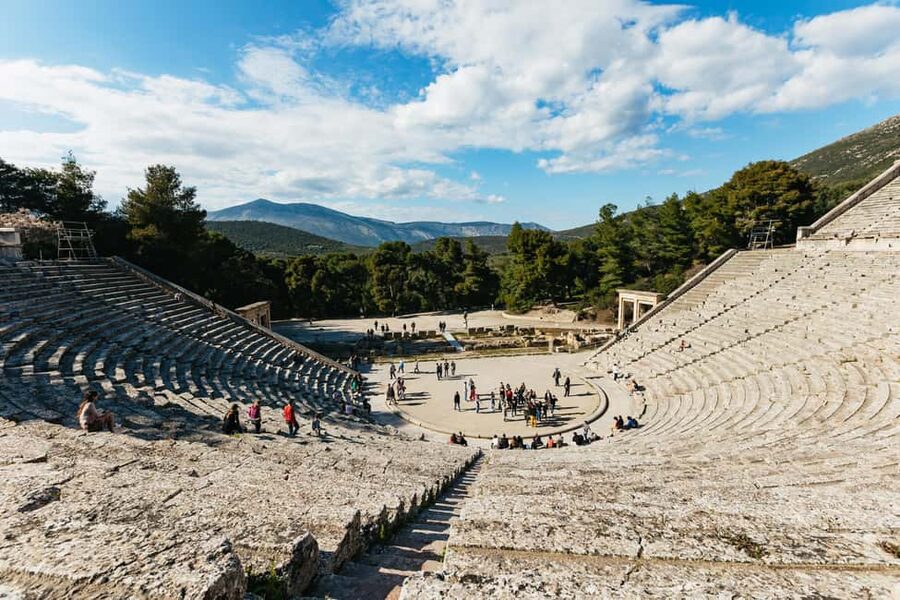
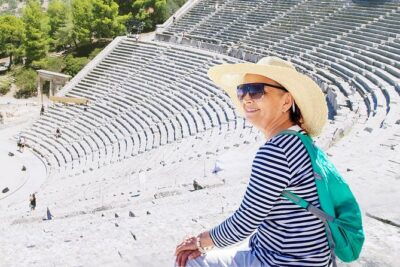
Epidaurus is the final major sight and, for many people, the highlight. The ancient theater is among the best-preserved classical Greek theaters in the country, and its acoustics remain famous.
Stand near the center of the orchestra and listen as your guide demonstrates how sound carries toward the upper seats. The point is not a modern amplification trick. The theater’s design allows a voice to travel remarkably well across the space, which helps explain why the site continues to be used for performances.
The theater dates to the fourth century and formed part of a wider sanctuary complex dedicated to healing. The tour focuses on the theater and its history, with a guided visit of about an hour. The entrance ticket is extra, just as it is at Mycenae.
Epidaurus is more orderly and open than Mycenae, but it is still an archaeological site. Bring water and expect to walk in the sun. The seating rises up a slope, so people who prefer to avoid stairs should stay near the lower sections. The guide can help you understand the theater’s design rather than leaving you to admire it as a photogenic ruin.
Patty has been singled out on different departures for her specialist explanations at Mycenae and Epidaurus. Other guides, including Georgia, Gari, and Danae, have also been praised for connecting the sites to Greek culture and mythology in a clear, engaging way. The exact guide is not guaranteed, but the tour’s format gives you more interpretation than a self-guided visit.
What the minivan journey is really like

Hotel pickup and drop-off are included from hotels and meeting points in central Athens. Pickup begins as much as 45 minutes before departure, so do not schedule something immediately before the tour. The operator contacts you about 48 hours before departure with the pickup details, provided you give the hotel name and location when booking.
Transport is by air-conditioned minivan. Different departures have used clean Mercedes vans and other well-maintained vehicles, with drivers such as Christos, Alexander, Tony, Fotis, Kris, and Vasilis praised for safe and smooth driving.
The drive is a major part of the day. You travel out of Athens, through the Corinth Canal area, and into Argolis before returning in the afternoon. This is not a tour where every stop is close together. The countryside views and guide commentary help make the road time worthwhile, but anyone who dislikes long drives should think carefully before booking.
Small groups are the sweet spot. They make pickup easier, allow the guide to answer questions, and avoid the impersonal feel of a large bus. Private options are also available if you want more control over the pace, though the supplied price of $124 per person may vary by group format and booking conditions.
Is $124 a fair price?
At $124 per person, the tour is not the cheapest way to reach the Peloponnese, but it offers a practical package. You get hotel pickup and drop-off, an air-conditioned vehicle, a live English-speaking guide, transport between widely separated sites, and guided visits at the two major archaeological stops.
That last point matters. If you drove yourself, you would still need to plan the route, handle parking, buy admission, and arrange your own explanations at Mycenae and Epidaurus. Public transport would be less direct and less convenient for fitting all three destinations into one day.
The price does not cover admission tickets, lunch, or drinks. Factor those expenses into your budget. You are paying for access to a well-organized day and professional guiding, not an all-inclusive package.
The value is strongest if you have limited time in Athens and want to see more of mainland Greece without renting a car. It is less compelling if you already plan to stay in Nafplio or have several days for independent exploration.
Who should book this tour?

I would choose this tour if you want ancient sites explained properly but do not want to manage the transport yourself. Families can benefit from the changing pace, especially when the guide keeps the history lively. Several guides have worked especially well with teenagers and mixed-interest groups.
It also suits first-time visitors who want a broad introduction to the Peloponnese. You see a canal, a Bronze Age citadel, a historic town, and a classical theater in one outing.
You may want something slower if you prefer long museum visits, extended photography stops, or quiet time at each ruin. The day is full, and traffic can make it longer than nine hours. A poor-weather day could also make the exposed sites less comfortable, though the itinerary remains appealing for its range.
The activity is conducted in English. Private and small-group versions are available, and free cancellation up to 24 hours before departure gives you some flexibility. Reserve now and pay later is also offered.
Should you book it?
Book this tour if you have one free day from Athens and want a guided route through the Peloponnese with strong historical content. Mycenae and Epidaurus are difficult to appreciate fully without context, and the added visit to Nafplio keeps the day from becoming a nonstop sequence of ruins.
Go in knowing that it is long, tickets are extra, and Nafplio is only a short introduction. For most visitors with limited time, the combination of safe transport, small-group attention, and guides such as Theo, Patty, Georgia, or George makes the $124 price a reasonable trade for convenience and insight.
FAQ
How long does the tour last?
The scheduled duration is about nine hours. Traffic can make the day shorter or longer, and pickup begins up to 45 minutes before departure.
Where does pickup take place?
Pickup is available from hotels and meeting points in central Athens. The listed pickup areas include Athens and Piraeus, but central Athens coverage applies.
Is hotel pickup included?
Yes. Hotel pickup and drop-off are included. If you stay in an apartment, the guide comes to the apartment address provided during booking.
What language is the tour conducted in?
The live tour guide speaks English.
Are Mycenae entrance tickets included?
No. Admission tickets to Mycenae are not included in the tour price.
Are Epidaurus theater tickets included?
No. Entrance to the ancient theater of Epidaurus is also paid separately.
Is lunch included?
No. Food and drinks are not included. The itinerary provides about an hour for lunch in Nafplio.
How much free time is available in Nafplio?
The schedule allows about 45 minutes of free time in Nafplio, followed by a separate lunch stop of about one hour.
Is the tour available as a private experience?
Yes. Private and small-group options are available.
Can I cancel the tour?
You can cancel up to 24 hours before departure for a full refund. Reserve now and pay later is also available.
New on the Nafplio shelf
- Corinth Canal, Mycenae, Nafplio, Epidaurus Private Tour plus a GREAT Lunch★ 5.0 · 28 reviews
- Full Day Biblical Ancient Corinth Canal Mycenae Epidauvro Nafplio★ 5.0 · 27 reviews
- 5-Day Best of Peloponnese Private Tour: Nafplio/Olympia/Mycenae/Epidaurus/more★ 5.0 · 36 reviews
- PELOPONNESE HIGHLIGHTS PRIVATE: Corinth Mycenae Nafplio Epidaurus★ 5.0 · 103 reviews
- Mercedes Private Tour Nafplio, Corinth Canal, Nemea Wine Tasting★ 5.0 · 142 reviews
- Corinth Canal, Mycenae, Nafplio and Epidaurus Private Tour from Athens★ 5.0 · 48 reviews
- From Athens: Mycenae, Epidaurus & Nafplion Full-Day Tour★ 4.0 · 147 reviews
- Epidaurus, Mycenae and Nafplio Small-Group Tour from Athens★ 4.5 · 168 reviews
Nafplio Tours, compared.
Ancient Corinth & Nafplio Full Day Trip with Swim
Read our verdict →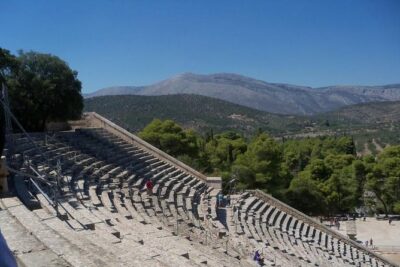
Mycenae and Nafplion Day Trip from Athens with Official guide
Read our verdict →
Mycenae, Epidaurus, Nafplio Full Day Private Tour from Athens
Read our verdict →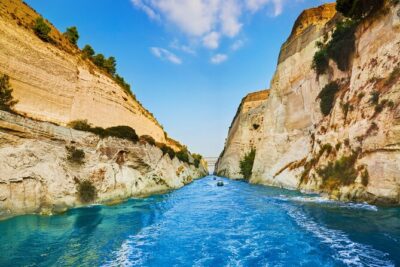
Mycenae, Epidaurus & Nafplio Full-Day V.R audio guided Tour
Read our verdict →
Sailing Cruise in Nafplio | with Local Treats
Read our verdict →Browse the lists this tour appears in